When a heat wave settles over Bellingham, WA, you rely on your air conditioner for a cool escape from the soaring temperatures. If your AC runs constantly but can’t keep your home comfortable, you may worry that something is seriously wrong. Fortunately, a stressed cooling system isn’t always a failing one.
Even a perfectly functioning air conditioner can struggle during extreme heat. As temperatures in Whatcom and Skagit counties climb higher than we typically experience, they push your HVAC system to its limit. Understanding the reasons behind this can help you stay comfortable, avoid unnecessary strain on your equipment, and know when to call a professional.
Is It Normal for an AC to Struggle During a Heat Wave?
In many cases, yes. Air conditioners can only handle a specific heat load based on a “design temperature differential.” This lets them keep your home about 20 degrees cooler than the outside air.
When outdoor temperatures in Bellingham are in the high 70s or low 80s Fahrenheit, maintaining a 20-degree difference is easy for a properly sized AC. But if it’s 95°F outside, your AC may only be able to cool your home to around 75°F. Your system’s continuous operation tells you it’s working as hard as it can to remove heat from your home faster than it’s seeping in.
Common Reasons Your AC Can’t Keep Up
While extreme weather plays a big role, several common issues can severely impact your AC’s ability to perform. Addressing these problems can improve comfort and possibly prevent a breakdown.
Dirty Air Filter
The single most common cause of poor AC performance is a clogged air filter. Your air conditioner must pull warm indoor air through the filter and over the evaporator coil to cool it. A filter packed with dust, pet dander, and other debris drastically restricts this airflow.
The result is longer cooling cycles, reduced efficiency, and more strain on the system’s fan motor. In severe cases, the lack of warm airflow can cause the evaporator coil to freeze into a block of ice, stopping the cooling process entirely.
Dirty Outdoor Condenser
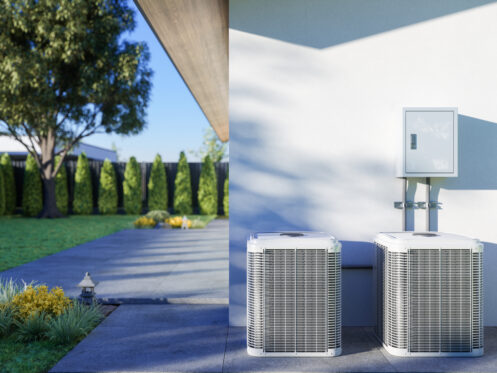
The outdoor condenser has a critical job: to release all the heat collected inside your home out into the air. The condenser coil has delicate fins that help dissipate this heat. Over time, they can cake with dirt, pollen, and grass clippings.
This layer of grime acts like an insulating blanket, trapping heat in the system. When the condenser can’t dispose of heat efficiently, it forces the compressor to work much harder and run hotter. This added strain reduces the AC’s cooling capacity, drives up energy bills, and can lead to premature failure.
Low Refrigerant
Refrigerant is the vital substance that circulates through your AC system, absorbing heat from inside and releasing it outside. A common misconception is that refrigerant gets “used up” like gasoline. In reality, it operates in a sealed, closed loop. If your system is low on refrigerant, it means there is a leak somewhere.
Without the correct amount of refrigerant, your AC cannot move heat effectively. This leads to symptoms like warm air coming from the vents, ice forming on the refrigerant lines, or the system running for hours without cooling your home. A refrigerant leak requires a certified technician to locate and repair it before recharging the system.
Aging or Inefficient Equipment
Most cooling systems in our region have a lifespan of 10 to 15 years. As an AC ages, components like the compressor, motors, and capacitors lose efficiency and become more prone to failure.
An older system may work fine during milder summers but no longer be able to handle the demands of an intense heat wave. Also, older units have much lower seasonal energy efficiency ratio ratings than modern SEER2 equipment, so they consume significantly more electricity to do the same amount of cooling.
Improper System Size
Your air conditioner’s capacity must meet your home’s unique needs. An undersized system will never be able to keep up with peak summer temperatures. An oversized system is also a problem. It will cool your home too quickly, before it can properly dehumidify the air. This results in a damp, clammy feeling.
Frequent on-and-off cycling also causes excessive wear on components. A professional load calculation is the only way to size your AC correctly for your home.
Other Factors That Make Your Home Harder to Cool
Sometimes, the problem isn’t just with the AC. Your home’s overall condition plays a huge part in how well your system can maintain a comfortable temperature.
- Poor attic insulation
- Air leaks around doors and windows
- Solar gain from large windows
- Leaking or blocked ductwork
What You Can Do During a Heat Wave
While some issues require a professional, you can take several steps to reduce the load on your AC during extreme heat.
- Replacing a dirty air filter
- Closing blinds to block solar heat
- Using ceiling fans for a wind-chill effect
- Avoiding heat-generating appliances
- Keeping all air vents clear
- Raising the thermostat temperature
Warning Signs Your AC Needs Professional Service
While you may be able to help an overworked air conditioner, you can’t rescue a failing one. If you notice any of these symptoms, turn off your AC and call for a professional diagnosis.
- Warm air from vents
- Weak airflow from registers
- Ice on refrigerant lines
- Short cycling
- Loud grinding, squealing, or banging
- Sudden spike in electricity bills
How Preventative Maintenance Helps Your AC Handle Summer Heat
Annual preventative AC maintenance is the best way to prepare your cooling system for summer’s worst heat. A technician’s comprehensive inspection and tune-up address many of the failure points mentioned above. Maintenance includes cleaning essential coils, checking refrigerant levels, inspecting electrical components, testing airflow, and identifying worn parts.
Since 1965, Marr's Heating, AC, Plumbing and Electrical has helped families in the Bellingham area keep their homes comfortable all summer long. Regular maintenance improves performance and efficiency and lets you know your system is ready to handle the heat.
Stay Cool This Summer With Marr's Heating, AC, Plumbing and Electrical
An air conditioner struggling during a heat wave doesn’t always require a costly repair. By understanding how your AC works and taking steps to reduce its workload, you can improve comfort and efficiency. Knowing the warning signs of a problem, you can request professional help when you need it.
The team at Marr's Heating, AC, Plumbing and Electrical has decades of experience helping homeowners in Whatcom and Skagit counties. Whether you need prompt air conditioning service to address a specific issue or want to schedule routine maintenance, we’re here to help.
For reliable AC service in Bellingham, contact the experts at Marr's Heating, AC, Plumbing and Electrical.
Frequently Asked Questions
Yes, it often is. During extreme heat, your home constantly gains heat from outdoors. Your AC may need to run continuously to keep up. As long as it produces cold air and maintains a stable indoor temperature, this is normal behavior.
The design temperature differential is usually the culprit. If the manufacturer designed your AC to cool about 20 degrees below the outdoor temperature, it will struggle to reach 72°F when it’s 95°F outside. An underlying issue like a dirty filter, low refrigerant, or a dirty condenser coil can also reduce cooling capacity.
We recommend setting your thermostat to the highest comfortable temperature, such as 78°F. The smaller the difference between the indoor and outdoor temperatures, the less strain you put on your system. This also helps save a significant amount of energy.
Yes, it can. A dirty filter is one of the most common reasons for ineffective cooling. It restricts airflow, which reduces cooling power, forces the system to run longer, and increases energy consumption.