When a heat wave hits Bellingham, the last thing you want is an air conditioner that can’t keep your home cool. You might notice your AC running constantly, the indoor temperature creeping up, and your energy bills soaring.
This doesn’t always mean your AC is broken. Extreme outdoor temperatures place a massive strain on cooling equipment, forcing it to work harder and longer just to keep up. In this guide, we’ll explain why your AC struggles during heat waves, what’s normal, what’s not, and what you can do to help your system perform its best when you need it most.
Why Air Conditioners Struggle During Heat Waves
An air conditioner’s job is to move heat from inside your home to the outside. However, its ability to do so is based on a specific set of design conditions. When outside temperatures skyrocket beyond typical seasonal averages, the system’s performance can be impacted.
Extreme heat dramatically increases the cooling demand, which is the heat your AC needs to remove. The hotter it is outside, the more heat seeps into your home through walls, windows, and ceilings. This forces the system to run for much longer cycles to reach and maintain your thermostat setting. Additionally, high humidity makes the air feel warmer, forcing your AC to remove moisture as well as heat.
How Much Cooling Should You Expect From Your AC?
It’s important to have realistic expectations for your AC’s performance during a heat wave. A key performance metric for any air conditioner is its “temperature differential” or “Delta T.” This is the difference between the temperature of the air entering the system (return air) and the temperature of the air leaving your vents (supply air).
A healthy, properly functioning air conditioner can typically achieve a temperature differential of about 15-20 degrees. This means if the air inside your home is 85°F, the air blowing from your vents should be around 65-70°F. However, it does not mean your AC can make your home 20 degrees cooler than the outside temperature. When it’s 95°F outside, your system will be working at its maximum capacity just to maintain an indoor temperature in the high 70s or low 80s.
Common Reasons Your AC Can’t Keep Up
While some struggle is normal in extreme heat, certain issues can severely hinder your AC’s ability to cool your home. If your system is falling well short of expectations, one of these common problems could be the culprit.
Dirty Air Filters
A clogged air filter is one of the most frequent causes of cooling problems. When the filter is dirty, it restricts airflow to the system. This forces your AC to work much harder, reduces its cooling efficiency, and puts unnecessary strain on critical components, which can lead to premature breakdowns.
Dirty Outdoor Condenser Coils
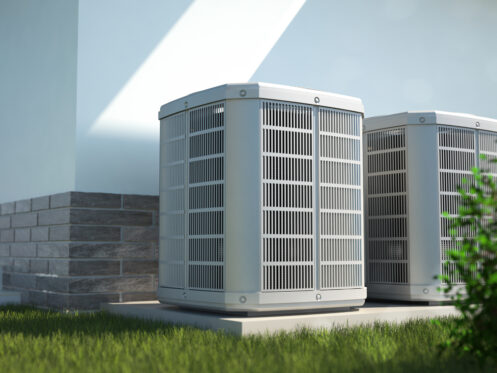
The outdoor unit of your AC system is responsible for releasing the heat collected from your home. Over time, the condenser coils can become caked with dirt, dust, and debris. This layer of grime acts as an insulator, making it difficult for the unit to transfer heat outside. As a result, your AC must run longer and harder to cool your home.
Low Refrigerant Levels
Refrigerant is the substance that absorbs heat from your indoor air. If your system is low on refrigerant, it’s almost always because of a leak. A lack of refrigerant significantly reduces your AC’s cooling capacity. Signs of a leak can include ice buildup on the refrigerant lines or coils and a system that runs constantly but produces lukewarm air.
Poor Airflow Throughout the Home
Even if your AC unit is producing cold air, it won’t do much good if that air can’t circulate effectively. Issues like blocked or closed vents, leaky or collapsed ductwork, or a malfunctioning blower fan can prevent cooled air from reaching all parts of your house. This often leads to hot spots and uneven temperatures room to room.
Aging or Undersized Equipment
An air conditioner, like any mechanical system, loses efficiency as it ages. A unit that’s over 10-15 years old may simply no longer have the capacity to handle the demands of a modern heat wave. It’s also possible the AC was undersized for your home from the start, meaning it was never powerful enough to cool the space effectively, especially during peak temperatures.
Why Heat Waves Affect Bellingham Homes Differently
In Bellingham and throughout Whatcom and Skagit Counties, homes face unique challenges during heat waves. Many older properties in our region were built when prolonged, extreme summer heat was rare. As a result, they weren’t designed with modern cooling needs in mind.
Many of these homes lack the comprehensive insulation or advanced air sealing found in newer construction, allowing more heat to infiltrate the living space. Large, single-pane windows can also contribute significantly to solar heat gain, turning your home into a greenhouse. As our summers become warmer, the demand for effective cooling is growing, and systems in older homes are often the first to show signs of strain.
What You Can Do to Help Your AC During a Wave
You can take several steps to reduce the cooling load on your system and improve your comfort during a heat wave.
- Replacing your air filter if it’s dirty
- Closing blinds and curtains on sun-facing windows
- Avoiding using heat-generating appliances during the day
- Sealing air leaks around windows and doors
- Using ceiling fans to circulate air
- Scheduling professional preventative maintenance
Signs Your AC Needs Professional Attention
Sometimes, home maintenance isn’t enough. If you notice any of the following symptoms, it’s time to call a qualified technician for an inspection.
- Warm or lukewarm air blowing from the vents
- The system is running constantly, but never reaches the set temperature
- Uneven cooling or noticeable hot spots
- Unusual noises like grinding, squealing, or banging
- A sudden and unexplained spike in your energy bills
When It May Be Time for an AC Upgrade
If your air conditioner is constantly struggling, is breaking down frequently, or is more than a decade old, repair may no longer be the most cost-effective solution. Pouring money into an aging, inefficient system can be a frustrating cycle. A modern, high-efficiency unit will not only provide superior comfort during summer heat but also significantly lower your monthly energy bills. An AC upgrade can be a smart investment in your home’s comfort and value.
Keep Your Home Comfortable With Marr's Heating, AC, Plumbing and Electrical
Navigating an intense summer heat wave is much easier with a reliable air conditioner. If your system is struggling to keep up, our team at Marr's Heating, AC, Plumbing and Electrical is here to help. We have been serving homeowners in Whatcom and Skagit counties since 1965, providing expert AC inspections, repairs, and preventative AC maintenance to keep systems running smoothly.
Don’t wait for a complete breakdown to get help. Contact us today to schedule service and ensure your home in Bellingham, WA stays cool and comfortable all summer.
Frequently Asked Questions
During extreme heat, your AC has to work nonstop to remove a massive amount of heat from your home. Constant operation is often necessary just to maintain the thermostat setting. It is not always a sign of a problem, especially on the hottest days of the year.
Yes, it’s normal for an AC system to have difficulty reaching very low thermostat settings (below 75°F) when outdoor temperatures are exceptionally high (above 95°F). The system is designed to cool by a certain amount. Extreme heat pushes your AC to its operational limits.
A well-functioning AC should be able to keep your home about 15-20 degrees cooler than the outside temperature. Pushing it to do more than that can cause excessive strain. This may not be achievable during a heat wave.
Yes, a dirty filter chokes off the airflow your system needs to operate. This reduces its cooling power and increases energy consumption. It can cause the system to overheat or freeze up, making it much less effective.
This could be due to several reasons. During a heat wave, the cooling load may simply be too high. However, it could also indicate a problem like a dirty filter, clogged condenser coils, low refrigerant, or an undersized unit.
This depends on the age of your system and the cost of the repair. It also depends on its overall efficiency. If your AC is over 10 years old, requires frequent and expensive repairs, and struggles to keep you comfortable, replacement is often the more sensible long-term investment.