
When you need a new water heater, you have two main options. You can choose a traditional tank system or a tankless model. Each type works differently and offers its own benefits.
The right choice depends on your home, budget, and daily hot water use. Household size also matters. Some homes need steady hot water for many people. Others need a smaller system that saves space and energy.
Before you choose, it helps to understand how these systems compare. The better you know the differences, the easier it is to pick the right fit for your home.
How They Work
Tank water heaters store hot water in a large insulated tank. The system heats the water and keeps it ready for use. When you turn on a faucet, the unit pulls hot water from the tank.
Tankless systems work in a different way. They heat water only when you need it. When you turn on a tap, cold water moves through the unit and heats on demand.
Both systems can run on gas or electricity. Each fuel type has its own pros and cons. If you want to learn more, visit our page about tankless water heaters.
Space Considerations
Tank water heaters take up more room because they include a storage tank. You need floor space for the unit and enough room for service access. The tank size can be a challenge in small utility rooms.
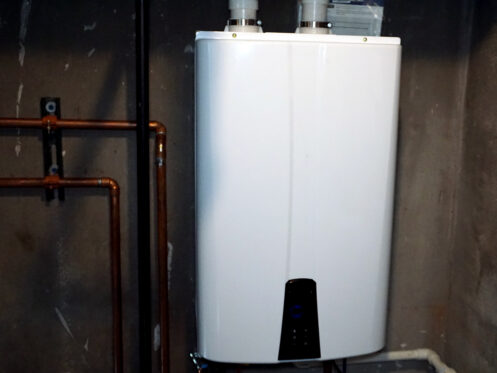
Tankless systems are much smaller. Most units mount on a wall, which frees up floor space. That compact design works well in condos, townhomes, and smaller houses.
If space is tight, a tankless unit may be the better choice. It gives you more flexibility and can help keep storage areas less crowded.
Hot Water Timing and Supply
Many homeowners hear that tankless systems give instant hot water. That idea can be misleading. Both types still need time to move hot water through your pipes.
You may wait a few seconds before hot water reaches the faucet. That delay happens because cold water sits in the plumbing line. The heater type does not fully change that.
The bigger difference is how long the hot water lasts. A tankless system keeps heating water as long as demand stays within its limits. A tank system can run out once the stored water is gone.
After that, a tank heater needs time to recover. Recovery means reheating a new supply of water. That can take 30 minutes or longer, depending on the unit.
Capacity and Household Demand
Tank systems measure capacity in gallons. This number shows how much hot water the tank can hold at once. Larger tanks can serve more people before running low.
Tankless systems use a different rating. They measure output in gallons per minute, or GPM. GPM tells you how much hot water the unit can produce at once.
If your family uses several fixtures at the same time, capacity matters a lot. Showers, dishwashers, and washing machines can all compete for hot water. A small unit may struggle to keep up.
Larger households often need a higher-capacity system. In some cases, one tankless unit may not be enough. We may recommend a larger model or multiple units for better coverage.
This is one reason professional sizing matters. A good recommendation depends on your actual water use, not just your home’s square footage.
Installation and Upfront Costs
Tankless systems usually cost more to install than tank models. The unit itself costs more in many cases. The labor can also cost more, depending on your home.
Some homes need upgrades before a tankless system will work properly. Gas models may need a larger gas line. Electric models may need more power than your panel can provide.
Tank water heaters usually cost less upfront. They are also easier to replace when you already have a similar setup. Their cost can make them a better option for a tighter budget.
That said, cost should not be your only factor. A lower installation price may not mean lower long-term value. You should compare the upfront cost with the long-term performance.
Energy Efficiency
Tankless systems are more energy efficient because they heat water only when needed. They do not keep a stored supply hot all day. This helps reduce wasted energy.
Tank systems lose heat over time while the water sits in storage. This is called standby heat loss. The unit must keep reheating water, even when you are not using it.
Newer tank systems are more efficient than older ones. Better insulation helps reduce heat loss. Even so, tankless units often come out ahead in energy savings.
If cutting energy use is a top goal, tankless may appeal to you. If lower upfront cost matters more, a tank system may still make sense.
Maintenance and Lifespan
Both systems need routine maintenance to perform well. Tank water heaters need to be flushed to remove sediment. Tankless units also need regular service, especially in areas with hard water.
Tankless systems often require descaling to clear mineral buildup. Without that service, performance can drop over time. Like any appliance, good care helps the unit last longer.
Tankless systems often last 15 to 20 years or more. Tank water heaters usually last 10 to 15 years. Exact lifespan depends on the model, water quality, and maintenance history.
Risk of Water Damage
Both systems can leak, but the risk looks different. A tank water heater stores many gallons of water in a single tank. If the tank fails, that water can spill into your home.
This can damage floors, walls, and nearby belongings. In some cases, it can cause major cleanup costs. That risk is one reason some homeowners prefer tankless units.
Tankless systems do not store water in a large tank. They can still leak, but they usually do not release the same volume of water. That lowers the risk of major flooding.
Which Type Fits Your Home Best?
A tank water heater often works well for homes that want lower upfront costs. It can also be a good fit for homes with enough installation space. Many families choose this option because it is familiar and dependable.
A tankless unit may be better if you want to save space and improve efficiency. It also helps if your household uses a lot of hot water over time. Homes with long-term ownership plans often benefit the most.
You should also think about your daily habits. Do several people shower at the same time? Do you run appliances while using hot water elsewhere? These details help guide the best choice.
Choosing the Right Option for Your Home
There is no single best choice for every home. Your decision should depend on your budget, space, water use, and long-term plans. The best system is the one that matches how your household lives.
We can help you compare both options and choose the right fit. At Marr's Heating, AC, Plumbing and Electrical, we install and service both traditional and water heater systems for Bellingham, WA, homeowners.
If you are ready to upgrade, Marr's Heating, AC, Plumbing and Electrical is here to help. We can explain your options, answer your questions, and recommend a system that fits your home.