As technology continues to advance, so does our electricity demand. A growing number of Washington homeowners are investing in high-demand appliances like air conditioners or heat pumps to boost comfort, hot tubs to relax in and EV chargers that allow them to quickly charge their vehicle’s battery at home. These types of appliances provide many benefits, but they can also put a major strain on your electrical system. Ensuring that your home has sufficient electrical service to meet the increased demand is crucial for avoiding major issues, such as the appliance not working properly or an increased risk of electrical hazards.
What to Know When Installing a High-Demand Appliance
Most of the electrical circuits in your house supply 120-volt power and are either 15 or 20 amps. The majority of high-demand appliances run on 240 volts and typically range anywhere from 15 to 80 amps. The National Electrical Code (NEC) requires that any 240-volt appliance be on a dedicated circuit that supplies power to that appliance only. The wattage of the appliance determines how many amps the circuit breaker needs to be. Let’s say that you’re installing a new 2,500-watt AC unit. While the unit only draws just over 10 amps, it needs to have at least a 15-amp breaker. That’s because the NEC requires that the amperage of the breaker is at least 20% higher than the amp draw of the appliance.
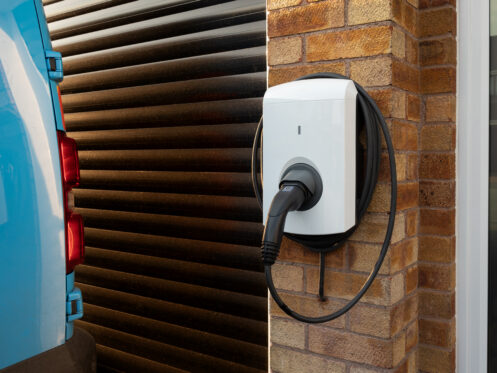
Most Level 2 EV charging stations have fairly high amperage requirements. Although some smaller plug-in chargers are only 16 to 32 amps, most homeowners opt for a 40- or 48-amp charging station so that they can enjoy faster charging speeds. The fastest, most powerful charging stations range from 60 to 80 amps. A 60-amp station requires a 72-amp circuit, and an 80-amp station requires a 100-amp circuit.
NEC rules require that you hire a licensed electrician any time you need to install a new circuit, which is almost always necessary when adding a new high-demand, 240-volt appliance. The local electrical and building codes in most places also require that you first obtain a permit and have the installation inspected by the local electrical inspector once it’s complete.
Why Electrical Load Calculations Are Essential
The amperage of your electrical service plan determines the total amount of electricity you can safely draw. When you’re planning to install a new high-demand appliance, the first thing you need to do is have an electrician perform an electrical load calculation. This calculation allows the electrician to determine if your existing electrical service has enough remaining amps to support the new appliance.
An electrical load calculation essentially just involves adding up the wattage of all of the appliances, lighting and electronics. However, the actual calculation is a bit more involved. There generally won’t ever be a time when everything in the house is drawing power at the same time. The other thing you need to account for is the fact that the motors in appliances like air conditioners, heat pumps, refrigerators, freezers and clothes dryers draw much more power when first starting up. This starting load is typically anywhere between two and six times higher than the amount of power the motor draws once it’s fully up and running. If you don’t factor the starting load into the calculation, you may still encounter issues during times of peak electricity demand.
Electricians use a special formula that allows them to estimate what your maximum load at any given time would likely be. Once they have this number, they can then compare it to the amperage of your electrical panel to determine if the panel is sufficiently large to support the new appliance.
The NEC currently requires that all new houses have at least a 100-amp service panel. While 100 amps is the minimum requirement, a 100-amp panel is really only sufficient for a smaller house with no more than one or two 240-volt appliances. That’s why the majority of newer houses have either a 150- or 200-amp service panel. Larger houses with much higher energy demands can even need a 400-amp panel. This is most common if the house has multiple HVAC systems or dual EV chargers that enable two vehicles to charge at the same time. With 400 amps, there is typically the primary meter main and disconnect, which is connected to two separate 200-amp panels.
Let’s say that you have a 100-amp panel and want to install a 48-amp EV charger. The charger would need to be on a 60-amp circuit, meaning it would account for more than half of the available power. This creates an extremely high chance of your electrical system getting overloaded whenever you use the charger. Due to the risk, your only option is to first upgrade to a higher-amperage service panel that can support the load of the charger. This is a legal requirement, as you won’t be able to obtain the necessary permit if your existing electrical service isn’t sufficient to meet the charger’s demand.
The Danger of Overloading Your Electrical System
Overloading your electrical system for even a short time carries numerous risks. The biggest concern is that it can lead to your electrical panel overheating. If the panel gets too hot, the wiring can begin to melt and potentially result in the panel catching on fire. Whenever the sheathing on an electrical wire melts, there is also the risk of the live wire touching the neutral wire. If that happens, the electrical current suddenly flows unrestricted, leading to a huge spike in power that can damage or destroy everything on that circuit. The wires can also start sending off sparks that result in a fire.
If your electrical service panel isn’t sufficiently sized, you can encounter a few other issues whenever a high-demand appliance turns on and off. One thing you’ll frequently see is some of your lights flickering or dimming for a few seconds when your AC or another high-demand appliance is starting up. The reason this happens is simply that the appliance consumes so much of the available current when it starts. This results in the power flowing through the rest of the circuits temporarily decreasing or fluctuating.
The other thing you need to worry about with an undersized panel is frequent power surges damaging your appliances and electronics, causing them to give out sooner. Most electrical systems experience numerous small power surges every day whenever appliances like an AC unit or refrigerator turn on. If your service panel isn’t big enough, you’ll usually experience more frequent and more powerful surges that can potentially do major damage.
Get Professional Help Today
When you need an experienced electrician in Bellingham, WA, Marr's Heating, AC, Plumbing and Electrical is the company to call. Our family-owned and -operated business has been serving homeowners since 1965, and we’re ready to safely and correctly handle your electrical upgrade, installation and repair needs. From electrical panel upgrades to EV charger installation, you can trust that we’ll provide quality work and exceptional customer service at a fair price. If you’re looking to add an EV charger or other high-demand appliance to your home, contact us to schedule a consultation and in-home electrical system evaluation.